Tetrachlorophthalic anhydride (TCPA) is a crucial chemical compound with a wide range of applications in various industries. As a leading supplier of Tetrachlorophthalic anhydride, I often encounter inquiries regarding its hydrolysis products. In this blog post, I will delve into the science behind the hydrolysis of Tetrachlorophthalic anhydride, explore its hydrolysis products, and discuss their significance. Tetrachlorophthalic Anhydride
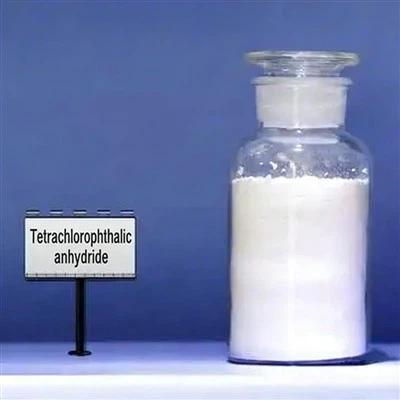
Understanding Tetrachlorophthalic Anhydride
Tetrachlorophthalic anhydride is an organochlorine compound with the chemical formula C₈Cl₄O₃. It is a white to off – white crystalline solid at room temperature. TCPA is highly reactive due to the presence of the anhydride functional group and four chlorine atoms attached to the benzene ring. These chemical properties make it useful for the synthesis of many other compounds.
Hydrolysis of Tetrachlorophthalic Anhydride
Hydrolysis is a chemical reaction in which a compound reacts with water. When Tetrachlorophthalic anhydride undergoes hydrolysis, the anhydride group reacts with water molecules. The reaction mechanism involves the nucleophilic attack of a water molecule on the carbonyl carbon of the anhydride group.
The general equation for the hydrolysis of an anhydride is:
[R – CO – O – CO – R’+ H_{2}O\rightarrow R – COOH+R’ – COOH]
For Tetrachlorophthalic anhydride, the reaction is as follows:
[C_{8}Cl_{4}O_{3}+2H_{2}O\rightarrow C_{8}Cl_{4}O_{2}(OH)_{2}]
The main hydrolysis product of Tetrachlorophthalic anhydride is Tetrachlorophthalic acid. The anhydride ring opens up, and two hydroxyl groups from water molecules are added to the carbonyl carbons, forming a dicarboxylic acid.
Properties of Tetrachlorophthalic Acid
Tetrachlorophthalic acid (TCPA acid) is a dicarboxylic acid with four chlorine atoms on the benzene ring. It is a white crystalline powder. One of the key properties of TCPA acid is its acidity. The presence of two carboxylic acid groups (-COOH) makes it a relatively strong acid.
The solubility of TCPA acid in water is limited due to the non – polar nature of the chlorinated benzene ring. However, it can dissolve in some organic solvents such as acetone, ethanol, and ethyl acetate.
Significance of Hydrolysis Products
In the Chemical Industry
Tetrachlorophthalic acid serves as a valuable intermediate in the synthesis of other chemicals. It can be used to produce various esters by reacting with alcohols through an esterification reaction. These esters are used in applications such as plasticizers, flame retardants, and pesticides.
For example, some esters of Tetrachlorophthalic acid can be incorporated into plastics to improve their flexibility and durability. In the case of flame retardants, the chlorinated structure of the acid moiety can help prevent the spread of fire in materials.
In Environmental Considerations
The hydrolysis of Tetrachlorophthalic anhydride to form an acid is an important aspect in environmental studies. If TCPA is released into the environment and comes into contact with water, the formation of Tetrachlorophthalic acid can have implications for water quality. The acid can change the pH of water bodies, potentially affecting aquatic life.
However, understanding the hydrolysis process also allows for better environmental management. By controlling the conditions where TCPA is used or disposed of, the rate and extent of hydrolysis can be regulated, minimizing its environmental impact.
Controlling Hydrolysis of Tetrachlorophthalic Anhydride
As a supplier, we are aware of the importance of controlling the hydrolysis of Tetrachlorophthalic anhydride during storage and transportation. Since moisture can trigger hydrolysis, we ensure that TCPA is stored in a dry environment. Our products are typically packed in sealed containers with desiccants to absorb any trace amounts of moisture.
During transportation, we take extra precautions to prevent exposure to water. This includes using waterproof packaging materials and ensuring that the storage conditions in transit are dry.
Quality Assurance of Tetrachlorophthalic Anhydride
We understand that the quality of Tetrachlorophthalic anhydride is crucial for our customers. To ensure high – quality products, we have a strict quality control system in place. Our production facilities are equipped with state – of – the – art equipment for monitoring the chemical composition and purity of TCPA.
Before shipping, each batch of Tetrachlorophthalic anhydride undergoes a series of tests. These tests check for the presence of impurities, the degree of chlorination, and the reactivity of the compound. Only products that meet our rigorous quality standards are delivered to our customers.
Applications of Tetrachlorophthalic Anhydride and Its Hydrolysis Products
In the Polymer Industry
Tetrachlorophthalic anhydride is used in the production of certain types of polymers. When hydrolyzed to Tetrachlorophthalic acid, it can react with glycols to form polyesters. These polyesters have unique properties such as good heat resistance and chemical stability, making them suitable for use in high – performance applications.
In the Pharmaceutical Industry
Although direct use in pharmaceuticals is limited, the derivatives of Tetrachlorophthalic anhydride and its hydrolysis products can be used in the synthesis of some pharmaceutical intermediates. The chlorinated structure can introduce specific biological activities, which may be exploited in drug development.
Conclusion
In conclusion, the hydrolysis of Tetrachlorophthalic anhydride results in the formation of Tetrachlorophthalic acid. This hydrolysis process is not only a fundamental chemical reaction but also has significant implications in various industries and environmental management.

As a reliable supplier of Tetrachlorophthalic anhydride, we are committed to providing high – quality products and professional services. Our in – depth understanding of the chemistry of TCPA, including its hydrolysis, allows us to better meet the needs of our customers.
Tetrachlorophthalic Anhydride If you are interested in purchasing Tetrachlorophthalic anhydride for your industrial or research applications, we welcome you to contact us for a detailed discussion. We can offer you competitive prices, reliable product quality, and timely delivery. Let’s work together to achieve your business goals.
References
- "Organic Chemistry" by Paula Yurkanis Bruice.
- Chemical Society Publications on Chlorinated Organic Compounds.
- Industrial Chemical Handbook for Tetrachlorophthalic Anhydride and Related Compounds.
Shaoxing Huawei Chemical Co., Ltd.
Shaoxing Huawei Chemical Co., Ltd. is one of the most professional tetrachlorophthalic anhydride manufacturers and suppliers in China, also supports customized service. Welcome to buy bulk tetrachlorophthalic anhydride in stock here and get free sample from our factory. For price consultation, contact us.
Address: XIN’ER VILLAGE, MA’AN TOWN, BIN’HAI INDUSTRIAL DISTRICT, KEQIAO, SHAOXING, CHINA
E-mail: SALES@HUAWEICHEMICAL.COM
WebSite: https://www.huaweichemical.com/
