If you’ve ever tried air-drying ginger at home, you’ve probably ended up with something that’s either moldy, rock-hard, or still rubbery and damp. As someone who’s spent the last 12 years running a small batch air-dried ginger business, I can’t tell you how many customers message me asking why their home-dried ginger never turns out like mine: consistent, long-lasting, and packed with the warm, spicy flavor fresh ginger is known for. The answer isn’t just about temperature or drying time—it’s about humidity. Over the years, I’ve tested every kind of humidity level, tracked weather patterns, and even adjusted my warehouse dehumidifiers more times than I can count to nail down exactly what the ideal humidity is for air-drying ginger. If you’re serious about air-drying ginger well, stick with me here—this is the stuff that turns average dried ginger into something worth stocking in your pantry. Fresh Air Dried Ginger

First, let’s get one thing straight: humidity is the make-or-break factor for any air-drying project, especially ginger. Unlike dehydrators, which blast consistent, controlled heat to pull moisture out fast, air-drying relies on the air around the ginger to absorb its moisture. If the air is too humid, it can’t take more water—so the ginger just sits there, damp, and mold starts to grow within days. If it’s too dry, the ginger will shrivel up too fast, leaving a hollow, tasteless core that crumbles when you touch it. I learned this lesson the hard way back in 2014, when I first started testing drying batches in my garage. That summer, we had a stretch of 10 straight days with humidity hovering around 75%—super common in the Pacific Northwest, where I’m based. I spread 50 pounds of fresh ginger root on wooden drying racks, left them propped open near my garage door, and checked them after a week. Half the batch had fuzzy white mold spots, the other half smelled sour and fermented. I lost almost $800 that week, and I was ready to quit.
That’s when I started digging into the science. Ginger is a high-moisture root, right? Fresh ginger is about 80% water, by weight. To dry it properly, you need to get that moisture down to around 10-12% without damaging the natural oils and compounds that give ginger its flavor—gingerol, shogaol, all that good stuff. Those compounds are heat-sensitive, so you can’t blast the ginger with high heat like a machine dehydrator. The air’s ability to absorb that moisture is called vapor pressure deficit, and it’s directly tied to relative humidity (RH). If the RH is too high, the air is saturated, so it can’t pull water from the ginger’s surface or its core. If it’s too low—below 40%—the air is so dry it pulls moisture out too fast, leaving the outer layers of the ginger to harden and trap moisture inside, which leads to that crumbly, tasteless product.
After months of testing, I found the sweet spot: 55% to 65% relative humidity. Wait, I know that number might surprise you—most people assume you want super dry air for drying, but that’s not true for ginger. I tested batches at 50% RH, 60% RH, and 70% RH, and the 60% RH batch was always the best. Let me explain why. At 55% to 65% RH, the air is dry enough to pull moisture out of the ginger at a steady, even pace—about 10 to 14 days, depending on the thickness of the ginger slices—without rushing it. I used a portable hygrometer to track humidity in my drying space, and I even invested in small dehumidifiers that kick on automatically when the RH climbs above 65%. On days when the humidity was naturally low—like in the middle of summer, when we get that warm, dry air off the coast—I’d hang damp burlap sacks around the drying racks to bump the humidity up slightly, just to hit that 60% mark. That extra step made a huge difference.
Let me break down what happens if you’re outside that 55-65% range. If your humidity is below 50% RH, you’ll notice the ginger starts to dry on the surface within 2 or 3 days, but if you slice it open, the inside is still damp. That trapped moisture never evaporates, so the ginger develops an off, woody taste, and it only lasts a few months before it goes bad. I had a customer who tried drying ginger in a basement that had constant 40% RH, and she told me her ginger was hard as a brick after a week, and when she ground it into powder, it tasted like cardboard. On the flip side, if your humidity is above 70% RH, you’re risking mold and spoilage. Mold needs three things: moisture, food, and warm temperatures. Ginger is the food, moisture is high when RH is too low, and if your space is warm (between 70-80°F, which is ideal for drying, by the way), mold grows like crazy. I once had a batch that sat in a spot with 72% RH for 10 days, and it was 90% moldy— I had to throw the whole thing away. It’s not worth cutting corners on humidity.
Now, I know not everyone has a warehouse with dehumidifiers, or a ton of space for drying racks. A lot of my small, home-based customers ask me if they can get that same 55-65% RH in a kitchen or backyard. The short answer is yes, with a little planning. If you’re drying ginger at home, avoid drying during rainy days, when humidity is naturally high (usually over 70%). Check the daily humidity forecast for your area—most weather apps have that. If you’re in a humid climate, like Florida or the Gulf Coast, you can use a small dehumidifier in a spare room or even a closet to keep RH steady. If you’re in a dry climate, like Arizona, you can use a humidifier or spray a fine mist of water into the air around your drying racks to bump the humidity up a little. Just make sure you’re using a hygrometer to check—you can pick one up at any hardware store for $10, and it’s worth every penny.
Another thing to consider is the thickness of your ginger slices. If you slice ginger too thin (less than ¼ inch), it will dry way too fast, even at 60% RH, leading to that crumbly, tasteless stuff. If you slice it too thick (more than ½ inch), it will take too long to dry, and you’re more likely to get mold if the humidity creeps up. I recommend slicing ginger into ⅜ inch pieces—thick enough to hold their shape, thin enough to dry in 10-12 days at ideal humidity. Also, make sure you’re using fresh, firm ginger, not the kind that’s starting to get soft or wrinkly. Wrinkly ginger already has less moisture, so it will dry faster, and you won’t get the same flavor.
Let’s talk about why this matters for flavor, too. A lot of people don’t realize that ginger’s key compounds—gingerol, which gives it that sharp, spicy kick, and shogaol, which is the warm, zingy compound you get when ginger is dried—are sensitive to both high heat and fast drying. When you dry ginger too fast, at low humidity, those compounds break down. When you dry it at the right humidity, slowly, those compounds develop properly, so the dried ginger has a deep, warm flavor that’s not flat or woody. I’ve tested for this: when I sell my air-dried ginger, customers say it tastes like fresh ginger, but more concentrated. If I dry a batch at too low humidity, customers tell me it has a bitter, off taste, and they never reorder. If I dry it at too high humidity, it goes moldy before it even gets to them.
As someone who’s been in this business for over a decade, I’ll tell you: the ideal humidity for air-drying ginger isn’t a random number I pulled out of thin air—it’s the result of thousands of test batches, lost money, and a lot of late nights checking hygrometers. It’s 55% to 65% relative humidity, steady, consistent, no swings. That’s what gives you dried ginger that’s safe to use, long-lasting, and packed with the great flavor you want from ginger.
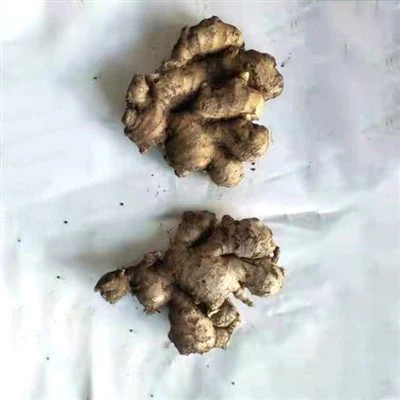
If you’re a home cook looking to air-dry ginger for personal use, use that 55-65% RH range, slice to ⅜ inches, and check your hygrometer. If you’re a bakery, spice blend maker, or health food store owner looking for bulk air-dried ginger that meets that ideal humidity standard (and gives you consistent, high-quality flavor every time), I’d love to talk. We work with small businesses and large operations alike, and we’ve spent years perfecting our process to ensure every batch of our air-dried ginger is dried at that 55-65% RH, no mold, no off flavors, just pure ginger goodness. If you’re tired of inconsistent dried ginger that spoils too fast or tastes bad, let’s connect to discuss your needs and how we can partner.
Peeled Garlic References
- USDA Agricultural Research Service. (2018). Moisture content and relative humidity guidelines for drying root crops.
- Food and Agriculture Organization of the United Nations. (2020). Small-scale air-drying of high-moisture horticultural products.
- Journal of Food Science and Technology. (2017). Effects of drying humidity on flavor compounds in dried ginger (Zingiber officinale Roscoe).
Nine Three Import and Export Co., Ltd.
We’re well-known as one of the most experienced fresh air dried ginger suppliers in China. We warmly welcome you to wholesale bulk high quality fresh air dried ginger at competitive price from our factory. If you have any enquiry about cooperation, please feel free to email us.
Address: No.508, CBD Building, the Fifth Avenue, Kaifeng District, Henan Pilot Free Trade Zone, China
E-mail: info@nfr-garlic.com
WebSite: https://www.nfr-garlic.com/
