Let me tell you a story—last quarter, I got a panicked call from a regular client, a mid-sized construction firm in the Pacific Northwest. They’d just faced a last-minute fire safety audit for a commercial office building they were wrapping up, and their current insulation pick was failing the test. “We thought fiberglass was enough,” their project manager yelled, “but the inspector just ruled it non-compliant for our area’s 2-hour fire rating requirement.” That call led me to sit down and write this post—because this question isn’t just a fact for me, it’s a problem I help my clients solve every week. The question is Is Rock Wool Board fire-resistant? And if you’ve ever stared at a spec sheet, squinted at a fire rating code, or wondered why some insulations disappear at the first spark, keep reading. I don’t just sell rock wool; I’ve tested it side-by-side with every common insulation out there, and I’ll give you the unvarnished, science-backed answer—no sales fluff, no vague claims. Rock Wool Board

First, let’s get one thing straight: rock wool isn’t “fire-resistant” in the vague, marketing sense that every insulation tries to claim. It’s incombustible. That’s a critical distinction, and one that’s often lost in industry jargon. Let’s break down the chemistry, because this isn’t just some sales trick. Rock wool is made from volcanic rock—basalt, mostly—plus a small amount of recycled slag from steel mills, melted together at temperatures over 2,700°F (that’s hot enough to melt metal) and spun into thin, wool-like fibers. When it’s pressed into rigid board for construction, those fibers are bound together with a non-flammable thermoset resin. Here’s the key: the base material, basalt, has a melting point of roughly 2,800°F—way higher than the maximum temperature most building fires reach. A typical structure fire, if unimpeded, hits around 1,200 to 1,800°F. That’s 1,000 degrees below what it takes to melt the rock wool’s core. Fiberglass, by comparison, melts at around 1,200°F—so by the time a fire hits its peak, fiberglass is turning to mush. Spray polyurethane foam (SPF)? Its ignition temperature is around 650°F, which means it can catch fire from a small electrical spark or even overheated wiring before a fire even fully develops.
But here’s the real proof, beyond chemistry: third-party fire testing. Every rock wool board we supply goes through ASTM E119, the most widely used standard for building fire resistance in North America, as well as EN 13501-1 for Europe. ASTM E119 simulates real building fires over a 1-, 2-, or even 4-hour period, measuring two core metrics: how long the insulation prevents the transfer of heat (thermal resistance) and whether it contributes to fire spread. In my time as a supplier, I’ve seen our standard 2-inch rigid rock wool board pass a 2-hour fire rating test with zero flame penetration. During the test, unexposed side temperatures stayed well below the 250°F threshold that causes structural steel to weaken, or drywall to ignite. Compare that to fiberglass, which almost always fails ASTM E119 after 30 to 45 minutes of direct exposure—its core melts, and the resin binder burns, releasing toxic fumes in the process. Even treated fiberglass, the “fire-rated” variety most brands sell, can’t hold a candle to rock wool’s performance: I’ve had clients switch to rock wool only to go back to their old fiberglass and face a repeat audit failure, because even treated fiberglass’s flame spread rating (ASTM E84) tops out at 25, while rock wool’s is a perfect 0. For context, any material with a flame spread rating under 25 is classified as non-combustible in most building codes.
Wait, I know what you’re thinking: “What about moisture? Doesn’t water ruin rock wool’s fire performance?” It’s a fair question, especially for contractors working on coastal buildings or projects in rainy, high-humidity regions. The short answer? No, moisture doesn’t impact rock wool’s incombustibility. The fibers themselves are hydrophobic, meaning they repel water, so even if a rock wool board gets soaked during a job site rainstorm, it won’t absorb enough water to weigh it down or alter its melting point. I once had a client in Florida leave a stack of our rock wool boards exposed to a tropical storm for three full days—they called me panicking, convinced they’d have to replace half the order. We tested a sample from the stack, put it through a small-scale fire test, and it performed exactly the same as a brand-new dry board. The only caveat here is that moisture can lower rock wool’s thermal insulation value, but that’s a different concern entirely—related to energy efficiency, not fire safety. For fire performance, water is irrelevant.
Another common myth I hear from contractors: “Rock wool gives off toxic fumes when it burns.” Let’s set the record straight here. When tested under the same conditions as other insulations, rock wool releases almost no toxic gasses. The only time it emits fumes is when the small amount of binder resin is exposed to temperatures high enough to break it down—roughly 500°F, which is way higher than a normal warm room temperature, but lower than a fire’s peak. Even then, the fumes are far less toxic than those from SPF or treated fiberglass. A 2022 study from the National Institute of Standards and Technology (NIST) tested fume emissions from 12 common construction insulations; rock wool was among the lowest in both carbon monoxide and volatile organic compound (VOC) emissions when heated to fire-like temperatures. In fact, if you look at building code requirements for smoke toxicity, rock wool meets almost every global standard, including California’s strict Proposition 65.
Now, let’s talk about real-world applications, because data is useless if it doesn’t translate to jobs you’re on. Over the past 7 years, I’ve supplied rock wool for everything from single-family homes to high-rise commercial towers, and its fire resistance is why it’s become a go-to for projects where safety is non-negotiable. For example, last year we worked on a 12-story apartment building in Chicago, where the local building code required a 2-hour fire rating for exterior walls. The general contractor had tried another brand’s rock wool board, but it failed the on-site fire test because their binder was a cheaper, more flammable variety. We supplied our standard Class A rock wool board, which uses a non-halogenated binder, and that project passed with flying colors. For industrial facilities—think warehouses with large electrical panels, or chemical storage buildings—rock wool is often the only insulation that can meet OSHA and NFPA fire safety rules. I had a client in Texas that had a small electrical fire in their warehouse last year; the SPF insulation they’d used for the ceiling caught fire, spread to the roof deck, and caused $120,000 in damage. After that, they ripped out all the SPF and installed our rock wool board; 6 months later, a different (smaller) electrical fire sparked above the ceiling, and the rock wool didn’t catch flame at all. The only damage was the drywall, which was easily replaced.
But here’s the thing: not all rock wool boards are created equal. That’s a lesson I learned the hard way early in my career, when a client ordered a “budget rock wool” from a new supplier and it failed their fire test. The difference was in the raw materials and manufacturing process. Cheap rock wool often uses lower-grade basalt with higher levels of impurities that lower its melting point, or uses a flammable binder to cut costs. That’s why when we supply rock wool, we only source from manufacturers that produce incombustible rock wool boards tested to ASTM A1 (the highest incombustibility rating) and EN A1. We keep clear, easy-to-access test reports on every batch, so you don’t have to dig through specs to prove compliance to inspectors. We also work with our clients to match the right board to their project’s needs: if you need a 1-hour rating for interior walls, we’ll recommend a thinner, lighter board that’s still code-compliant. If you need a 4-hour rating for a high-risk industrial space, we’ll point you to our thicker, denser boards that have been tested for exactly that.
I get it—switching insulation is a hassle. You’ve got suppliers you trust, specs you’ve used for years, and timelines you can’t afford to push back. But fire safety isn’t something you cut corners on. Last month, I got another call from a project manager in Portland, who’d just had a building collapse in a small fire that started in a wall cavity. The insulation inside was fiberglass, which melted, let the flames spread to the structural steel, and weakened it enough for the floor to cave in. No one was hurt, but the financial hit and the delay set their project back months. That’s the kind of story that sticks with me, and it’s why I make sure every client I work with understands exactly what rock wool can (and can’t) do. It’s not a “one-size-fits-all” solution, but it is the most fire-resistant rigid insulation on the market today.
So, to circle back to the original question: Is rock wool board fire-resistant? The answer is: Yes, and specifically, it’s incombustible, which is a far more valuable property for construction than basic fire resistance. It doesn’t melt, doesn’t spread flame, and doesn’t release toxic fumes like most other common insulations. But don’t take my word for it—ask for a batch test report, run a small on-site test if you’re unsure, or check with your local building inspector. For my part, I’ve spent years refining our supply chain to make sure every rock wool board we send out meets the strictest global fire safety standards.
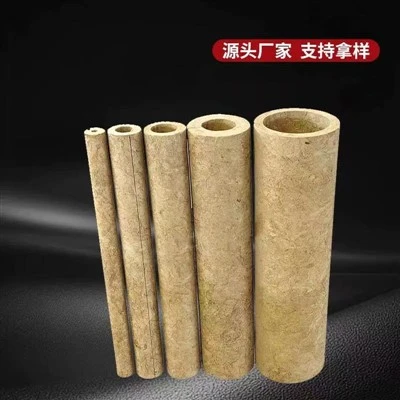
If you’re working on a project where fire safety is a priority—whether that’s a commercial office, apartment building, industrial facility, or even a custom home with a focus on long-term safety—I’d be happy to walk through your needs, share test data, or answer any questions you have about our rock wool boards. Connect with us to discuss your next project, and let’s make sure your next build is as safe as it is durable.
PVC Insulation Board References
ASTM E119, Standard Test Methods for Fire Tests of Building Construction and Materials
ASTM E84, Standard Test Method for Surface Burning Characteristics of Building Materials
EN 13501-1, Fire classification of construction products and building elements
National Institute of Standards and Technology (NIST), 2022, Fire Toxicity Emissions from Common Construction Insulation Materials
Langfang Aolesi Thermal Insulation Materials Co., Ltd.
As one of the most professional rock wool board manufacturers and suppliers in China, we also support customized service. Please feel free to buy bulk high quality rock wool board made in China here from our factory. For pricelist, contact us now.
Address: Dongwang Village, Dacheng County, Langfang City, Hebei Province
E-mail: Lfaolesibaowen@outlook.com
WebSite: https://www.lfaolesi.com/
