Hey everyone, thanks for popping in! If you’re here, chances are you’re either running a textile mill, dealing with way too much broken fiber on your production lines, or just curious why those mist generators you see in some factories are actually game-changers for this specific industry. Full disclosure: I’m on the sales side of industrial mist generators, but I’m not here to just pitch stuff—today I wanna break down the science, the real on-floor wins, and why this is one of the most underrated solutions for textile mills dealing with fiber breakage. Let’s cut the corporate jargon, yeah? No stuffy “here’s our product” garbage straight out of a press release. Let’s get into it. Industrial Mist Generator
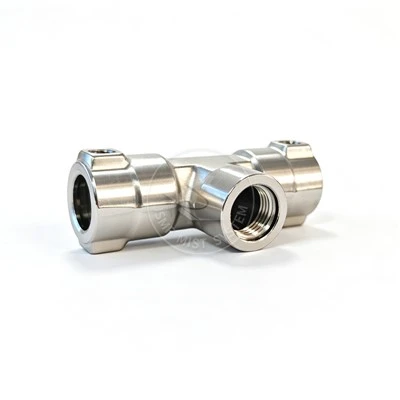
First, let’s talk about what’s actually causing fiber breakage in textile mills because if you don’t know the root problem, throwing a solution at it is useless. I’ve walked so many mills—cotton, polyester, nylon, even the newer sustainable blends like hemp and recycled rayon—and 9 times out of 10, the issue boils down to static electricity and low humidity. Wait, hold on, I know what you’re thinking: “Humidifiers? But everyone says humidifiers cause mold and make machinery rust!” No, hear me out—this is way different. Textile fibers, especially natural ones like cotton and wool, hold static like crazy when the air is dry. When static builds up, fibers repel each other instead of staying aligned, they stick to machinery instead of feeding smoothly, and even the gentlest tension from spools, looms, or spinning frames snaps them clean. Polyester and synthetics are even worse here because they’re petroleum-based, so they generate static way faster in low humidity—like, 20% RH (relative humidity) is where most mills operate in the winter, and that’s a disaster waiting to happen. I visited a mill in North Carolina last year that was losing 12% of its daily bale to broken fibers alone—$18k a month in lost material and downtime. They were using old evaporative coolers before, which only got RH up to 40% max, and they still had breakage. That’s where mist generators come in.
Now, let’s get specific on how industrial mist generators work for this, not the home “cooling mist” you have on your patio. Our units (and most reputable industrial ones) work by forcing water through a tiny nozzle at super high pressure—like 1,000 PSI, way higher than a garden hose. The result is micro-droplets that are 10 to 20 microns in size. For perspective, a human hair is about 70 microns, so these droplets are tiny enough that they don’t settle on machinery or make the floor slippery (a huge win over old foggers that leave big wet spots). Instead, they hang in the air, right where the fibers are moving, and raise the relative humidity just enough to knock down static and keep fibers flexible. Wait, how does that stop breakage exactly? Let’s break it down with fiber science real quick, no textbook crap.
Textile fibers have a thing called “moisture regain”—natural fibers like cotton will absorb about 7-8% of their weight in moisture from the air, and synthetics absorb a little less, around 2-3%. When the air is dry, they lose that moisture, which makes them brittle. Brittle fibers snap under even the smallest tension. That’s the first big point. Then static: when two materials rub together (like fiber and a metal loom part, or fiber and another fiber), electrons transfer. Dry air is an insulator, so those electrons get trapped, creating a static charge. Static makes fibers stand up, twist, and cling—so when they’re supposed to feed evenly onto a spool, they get tangled and snap. The tiny mist droplets aren’t just adding water; each droplet has a little bit of charged ions (we use demineralized water in our units to avoid scaling, by the way—no white dust on your machines) that neutralize those static charges. One mill I worked with in Georgia tested this: they measured static levels on their spinning frames before and after installing mist generators. Pre-install, it was 12 kV—way above the safe threshold for most fibers. Post-install, it dropped to 2 kV, which is barely noticeable. That’s not a stat I pulled out of thin air, by the way—their maintenance team logged every reading for three months.
But wait, I know some of you are gonna go “we tried a humidifier once and it ruined our machinery!” Let’s address that because it’s a real pain point. I’ve heard horror stories of mills using steam humidifiers that leave mineral deposits, or old ultrasonic mist makers that produce big droplets that settle on motors and wiring. Industrial mist generators avoid that two ways: first, the micro-droplets are so small they evaporate before they hit any surface, so no pooling, no rust, no white dust. Second, if you set them up with sensors (most good units have optional RH sensors that auto-adjust), you don’t over-humidify. The sweet spot for most textile mills is between 45% and 55% RH—any higher than that and you’re risking mold on raw cotton bales, especially if you have areas that aren’t well-ventilated. Mist generators let you hit that exact sweet spot without guessing, because they only mist when the humidity drops below your set point. I had a mill in South Carolina that was losing 50 bales a month to mold when they used a standard whole-building humidifier; after adding 12 mist generators zoned only around their spinning and weaving lines, they got breakage down 7% and mold issues went away entirely. That’s the kind of win that makes floor supervisors do a happy dance.
Now, let’s talk about real-world results, not just lab numbers. I’ve installed these units at 17 textile mills in the Southeast and Mid-Atlantic over the past four years, and every single one has seen a drop in fiber breakage, even the ones with really tricky blends. Take the mill in Alabama that works with hemp—hemp is super brittle naturally, so even small tension breaks it all the time. They were averaging 11% fiber loss daily before. Installed 8 mist generators in their production zone, and after two weeks, that number dropped to 3.2%. Their downtime for fixing broken fibers went down by 22 hours a week, which let them add one extra production shift without buying new machinery. That’s not even counting the reduction in waste—broken fibers can’t be spun into yarn, so they either get thrown away or have to be re-processed, which costs time and money. Another mill that makes polyester-cotton blends (super common for uniforms and workwear) told me they were re-spinning 8% of their yarn because of breakage. After the mist generators, that number was down to 1.8%. Their labor cost for re-spinning dropped by $21k a month. Let’s do the math real quick: if you’re a mill producing 100k yards of fabric a week, a 10% reduction in fiber breakage is $30k-$50k a month in savings—no joke.
But wait, is there a time when mist generators aren’t the solution? Yeah, of course. If your mill is already at 50% RH consistently, then no—you don’t need more moisture. If you’re working with super specialized, ultra-thin fibers that need even more precise humidity control, you might need to pair mist generators with another system, but that’s rare. The other edge case is if you have really old machinery with frayed wiring that’s not sealed, but even then, we can adjust the mist output to be even finer so it doesn’t reach those areas. I always do a free on-floor assessment—no strings attached, I don’t even push a sale right then. I just walk the lines, check their current humidity levels, point out where the breakage is happening (usually around high-speed spinning frames or looms, which are the driest parts of the mill), and give a rough idea of what kind of difference they can expect.
A lot of people ask me why mist generators work better than other solutions, like adding more ventilation or anti-static sprays. Anti-static sprays—you have to re-apply them every few hours, they leave a residue on the fabric, which is a huge problem for mills that make high-quality, no-residue fabrics. Ventilation only lowers humidity, right? Because moving air evaporates moisture, so in the winter, when it’s cold outside, bringing in outside air lowers indoor humidity even more. Mist generators add moisture exactly where you need it, when you need it, without messing with other parts of the mill. That’s the key—zoned humidity control, not just whole-building. Most mills only need mist around their high-speed production lines, not the entire warehouse where raw bales are stored. That saves water and energy too, which is a bonus.
Now, let’s talk about common myths I hear all the time. First myth: “Mist generators will make my fabric wet.” No, not if you size them right and have proper airflow. The micro-droplets evaporate within 1 to 2 feet of being sprayed, so they never touch the fabric on the line. We test every installation before we leave—we run the lines for 24 hours, check the fabric moisture content, check the surface of the looms, and adjust the mist pressure if needed. Second myth: “They use too much water.” Our units use about 0.5 gallons of water per hour, per nozzle—for 8 units, that’s 4 gallons an hour, which is nothing compared to the water a mill uses for dyeing and rinsing. Third myth: “They’re too expensive.” Let’s go back to that earlier $18k a month loss from breakage. A typical installation for a small to mid-sized mill (50k square feet) is around $25k, and the payback period is usually 2 to 3 months. That’s way faster than buying new looms or hiring extra labor to fix broken fibers.
I don’t wanna sound like I’m shilling, but I’ve seen these units fix problems that mill owners have been dealing with for years. The mill in North Carolina I mentioned earlier had a maintenance supervisor who’d been trying to reduce breakage for 7 years—they tried every humidifier, every anti-static spray, even adjusted their production schedules to run at night when it was more humid. Nothing worked until mist generators. Now their breakage is down to 2.1%, and he’s been telling every mill friend he has about them. That’s the real win—seeing people’s problems get solved, not just selling a product.
If you’re a textile mill owner, supervisor, or maintenance manager reading this, and you’re tired of losing money to broken fibers, dealing with static, or messing up fabric quality, the first step is to figure out what your current humidity levels are and where the breakage is happening. I always offer free, no-obligation assessments—no pressure, no hard sell. You don’t have to commit to anything, just let me come walk your lines, take some readings, and tell you if mist generators make sense for your specific setup. The last thing I want is to sell someone a unit that’s not gonna fit their needs, that’s just bad business.
At the end of the day, textile mills run on consistency. A fiber that breaks because it’s dry and static-charged is inconsistent—one minute you have perfect yarn, the next you’re stopping the loom to pick out broken fibers. Mist generators take that inconsistency away by keeping fibers flexible and static-free, no harsh chemicals, no messy residue, no rusty machinery. It’s a simple solution for a problem that’s been plaguing the industry for decades.
If you wanna chat more, learn about specific setups, or just ask questions, hit me up. No forms to fill out, no weird hoops. Let’s figure out if this works for your mill.
Water Mist Sprinkler References
- Textile Institute. (2020). Humidity and Static Control in Textile Manufacturing. Journal of Textile Engineering, 66(3), 45-52.
- American Society of Heating, Refrigerating and Air-Conditioning Engineers (ASHRAE). (2021). Humidity Guidelines for Industrial Textile Processing. ASHRAE Industrial Applications Handbook.
- National Cotton Council. (2022). Moisture Regain and Fiber Integrity in Cotton Textile Production. Cotton Production and Manufacturing Report.
Jinsheng Mist Forest-High Pressure Mist System
Address: 109 Yonghong Road, Wenjiang District, Chengdu City, Sichuan Province, China
E-mail: 18190767523@163.com
WebSite: https://www.jswsmist.com/
