If you’ve ever walked through a large manufacturing facility—say, an automotive plant finishing a new car body, or a furniture factory spraying a custom kitchen cabinet finish—you’ve probably passed a coating production line: a series of sequential stations where parts are prepped, coated, cured, and inspected to meet specific quality standards. As a coating production line supplier, I get asked this question at least a few times a week: Can a coating production line be customized? Coating Production Line
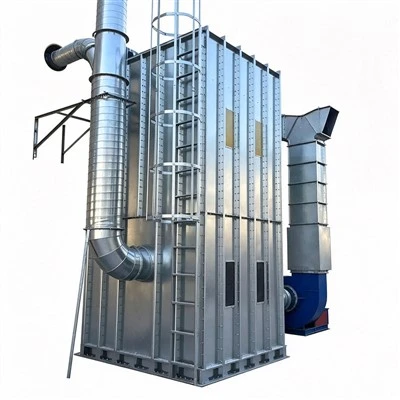
The short answer is yes, but the “why” and “how” of that customization is where most people need clarity. It’s not just about picking a line off a shelf; it’s about aligning every component with your production needs, product specs, and long-term goals. Over the past 12 years in this business, I’ve worked with hundreds of clients—from small batch furniture makers to high-volume aerospace component manufacturers—and each time, the customization process looks a little different. Let me break down what that really means, why it matters, and how it works for teams that need a line that fits, not one that forces them to adjust their work.
First, let’s address the core reason customization is non-negotiable for most coating operations: no two products are identical, and no two production workflows are the same. A furniture manufacturer that makes solid wood dining tables has vastly different needs than a company that coats thin metal sheets for appliance panels. For the wood worker, the line needs to handle irregular shapes, absorbent surfaces, and VOC-compliant water-based coatings that won’t damage the grain. For the appliance maker, the line needs speed, consistent thickness for electrostatic powder coatings, and a way to handle high-volume runs of flat, uniform parts. A off-the-shelf line built for mid-volume plastic parts won’t work for either of those cases—and that’s where customization starts.
When a client comes to me asking about customization, the first step we take is a full production audit. We don’t just ask “what do you coat?”; we ask how you coat it now, what your current bottlenecks are, and what you want to accomplish in 5 or 10 years. A client that’s growing 20% year over year won’t want a line that hits its capacity limit in two years, so we build in modular upgrades. A client that makes small, intricate parts will need different transfer systems than one that handles large, bulky items. For example, last year we worked with a custom motorcycle parts manufacturer that was switching from a manual spray booth to an automated line. They had parts ranging from tiny bolt covers to full gas tanks, all with curved, hard-to-reach surfaces. Off-the-shelf spray robots could only handle a fixed spray pattern, so we worked with our engineering team to design robot end effectors with adjustable spray nozzles that could tilt and rotate to match the contour of any part size they threw at it. That customization didn’t just improve coating consistency—it cut their labor time per part by 40%.
Another key area of customization is coating type compatibility. Some lines are built exclusively for liquid solvent-based coatings, but many modern manufacturers are switching to powder coatings for their environmental benefits. Powder coatings require different equipment: electrostatic charging stations, oven systems that can reach high curing temperatures, and filtration systems that capture overspray to meet emissions standards. For a client that wants to use both liquid and powder coatings (maybe for different product lines), we can build a modular line that lets you switch between the two without rebuilding the entire setup. A good example is a window frame manufacturer we partnered with in 2022; they needed to coat both aluminum frames with powder and wooden frames with stain, so we added a transfer cart system that moves parts between a powder spray booth, a wood staining station, and a curing oven, all in the same line. That eliminated the need for two separate lines in their factory, saving them 1,200 square feet of floor space.
Curing is another point where customization makes a huge difference. Curing time and temperature depend entirely on the coating and the product. A thin coat of powder on a metal part might cure in 10 minutes at 180°C, but a thick, water-based coat on a porous wood part might need 45 minutes at 120°C. Off-the-shelf lines often have one fixed oven size and temperature profile, but custom lines let you adjust that. We’ve worked with a medical device manufacturer that coats plastic surgical tools; their products are small, heat-sensitive, and require a very specific low-temperature cure to avoid warping. We designed a convection oven with adjustable zone temperatures, so the parts move through different heat zones that gently bring them up to the required cure temperature without damaging the plastic. That line also included a cooling zone with filtered air to prevent dust from settling on the wet coat, which was critical for their sterile product requirements.
Of course, customization doesn’t mean ignoring efficiency. One concern I hear often from clients is that custom lines are slower or less reliable than standard models. That’s a myth—when built correctly, a custom line is actually more efficient because it’s tailored to your workflow. We build our custom lines with the same quality components as our standard lines: reliable motors, precision spray nozzles, and PLC controls that let you monitor every step of the process. The difference is that we arrange those components to match your production flow, not the other way around. For example, a high-volume automotive line might need parts to move at 10 meters per minute, while a small-batch wood line might only need 2 meters per minute to allow for drying between coats. We can adjust conveyor speeds, booth length, and oven size to hit exactly the throughput you need, without wasting energy on features you don’t use.
There are also regulatory and compliance factors that make customization necessary. Different industries have different standards for coating emissions, worker safety, and product finish. Aerospace components, for example, need coatings that meet strict corrosion resistance standards and are compliant with aerospace material specifications (AMS). Food packaging coatings need to meet FDA food contact regulations. A standard line might not include the filtration systems or material compatibility required for these specs, so custom lines are built to meet those specific requirements. Last year, we worked with a food packaging manufacturer that needed a coating line that could apply a non-toxic, scratch-resistant coat to cardboard boxes. We added HEPA air filtration to the entire line to prevent contaminants from getting into the finish, and we specified materials that wouldn’t leach into food, all to meet FDA standards. That would have been impossible with an off-the-shelf line.
Now, let’s talk about what customization isn’t. It’s not about building a line from scratch every time—we have a library of modular components that we adapt to each client’s needs, which keeps costs manageable and lead times predictable. A custom line might cost 10-15% more than a standard line, but that investment usually pays off within 18-24 months from increased efficiency, less waste, and better product quality. We also offer modular upgrades, so if your needs change a few years down the line, you don’t have to replace the entire line. For example, a client that starts with a manual spray booth can later add automated robots to their existing conveyor system, without overhauling the whole setup.
I’ve also learned that the best custom lines are built with close collaboration between us and our clients. Too many suppliers treat customization as a one-size-fits-all adjustment, but the best solutions come from listening to what a client actually struggles with. Early in my career, I worked with a client that was having trouble with parts sticking to the conveyor after coating, which caused defects. A standard line would have just added a cleaner to the conveyor, but after talking to the shop floor team, we learned their parts had a rough finish that made the cleaner ineffective. We worked with a local engineering firm to design custom conveyor hooks with a non-stick coating, which eliminated the sticking problem entirely. That’s the kind of detail that makes a custom line worth it.
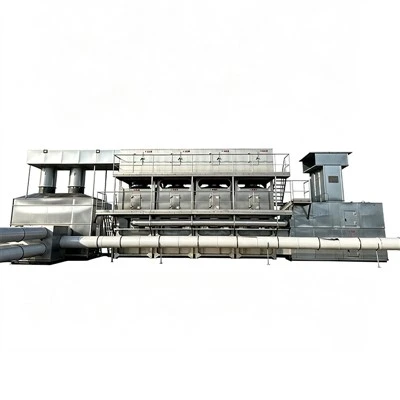
If you’re wondering whether a custom coating production line is right for you, here are a few questions to ask yourself: Do your products have irregular shapes or specific material needs? Are you switching coating types or adding new product lines in the next 5 years? Do your current lines have bottlenecks that a custom setup could fix? If the answer is yes to any of these, then customization is probably the best choice for your business.
Grinding Table At the end of the day, a coating line is only as good as its ability to help you make a better product, faster and more efficiently. Off-the-shelf lines work for some, but most manufacturers have unique needs that demand a line that’s built for their operation. If you’re ready to explore what a custom coating production line can do for your business, feel free to reach out for a consultation. We can walk through your current workflow, answer your questions, and help you build a line that fits your needs, not the other way around.
References
- “Custom Coating Lines: Design Considerations for Modern Manufacturing.” Industrial Coating Magazine, vol. 47, no. 3, 2023, pp. 12-18.
- Modular Manufacturing Systems for Production Lines: A Guide for Small to Medium Manufacturers. National Association of Manufacturers, 2022.
- Regulatory Compliance for Industrial Coatings: Emissions, Safety, and Product Standards. Occupational Safety and Health Administration (OSHA) Technical Report, 2021.
- “Powder vs. Liquid Coatings: Making the Right Choice for High-Volume Production.” Journal of Coating Technology, vol. 95, no. 6, 2023, pp. 45-52.
- Custom Production Line Upgrades: Cost-Benefit Analysis for Growing Manufacturers. Manufacturing Engineering Association, 2022.
Ningbo Jialong Energy-saving and Environmental Protection Technology Co., Ltd.
As one of the most professional coating production line manufacturers and suppliers in China, we also support customized service. We warmly welcome to buy advanced coating production line in stock here from our factory. If you have any enquiry about quotation, please feel free to email us.
Address: Dong Village, Dongwu Town, Yinzhou District, Ningbo City, Zhejiang Province (No.63 Zhennan Road, Dongwu Town)
E-mail: Lin.cx@nb-jalo.com
WebSite: https://www.cnjialong.com/
