If you’ve ever stood in a power substation, walked past a network of overhead power lines crisscrossing a city, or plugged a high-wattage industrial machine into a heavy-duty outlet, you’ve relied on cables that almost certainly have one thing in common: special paper layered inside their insulation systems. For 12 years, I’ve been a supplier of paper built exclusively for the cable industry, and the question I get asked most often by engineers, line operators, and purchasing managers isn’t just “what is this paper?” It’s “how does it hold up under heat—because if it fails, the entire cable network fails.” Paper for The Cable Industry

Thermal stability isn’t just a buzzword in cable manufacturing; it’s a non-negotiable performance metric. Unlike standard copy paper, which falls apart at temperatures above 230°F (110°C) and discolors permanently at just 180°F (82°C), cable paper is engineered from the ground up to resist breakdown in high-heat environments, whether that’s buried underground, strung through hot industrial warehouses, or wrapped around power lines carrying thousands of volts. Let’s break down what thermal stability means for cable paper, how we test it, and why it’s the difference between a cable that lasts 10 years and one that lasts 50.
First, let’s define the term in this specific context. For cable insulation materials, thermal stability refers to a material’s ability to retain its mechanical strength, dielectric properties, and structural integrity when exposed to sustained high temperatures, as well as resist thermal degradation (caused by oxidation, hydrolysis, or thermal cracking) and thermal runaway, a dangerous feedback loop where heat builds faster than it can dissipate, melting insulation and causing shorts or fires. Cable paper’s primary job isn’t just to insulate electricity—it’s to separate layers of conductor, prevent electrical arcing between wires, and absorb minor stresses from cable installation and expansion. If it loses its stability, all of those jobs fail.
The base material of cable paper is almost always kraft pulp, but not just any kraft pulp. Standard kraft paper for packaging is made with short cellulose fibers that are pressed for strength in dry conditions. Cable paper uses long-fiber kraft pulp, derived specifically from softwood trees like pine and spruce. These long fibers create a denser, more interwoven structure that’s inherently more resistant to heat than the shorter, coarser fibers in general-purpose paper. We refine the pulp to a specific viscosity (measured as degree of polymerization, or DP) before processing: DP measures the average length of cellulose chains in the fiber, and our cable paper has a DP of at least 1,800, compared to 1,000 or less for regular kraft paper. Longer cellulose chains mean more chemical bonds holding the fiber together, so when heat starts to break those bonds, it takes far more energy to reduce the paper’s strength.
Next comes the manufacturing process, which is where most of the thermal stability of our cable paper comes from. After pulping, we don’t just press the pulp into sheets—we go through a series of purification steps to remove residual lignin, a organic compound that breaks down easily at high temperatures and releases volatile gases that can corrode cable conductors. We also add a small, controlled amount of stabilizing compounds: things like phenolic antioxidants and magnesium oxide, which act as “heat buffers” that absorb excess thermal energy and slow oxidation reactions. This is not a random additive; we test every batch to ensure the stabilizing agents don’t compromise the paper’s dielectric properties, which are critical for electricity flow.
Now, how do we measure and verify thermal stability for our cable paper? It’s not enough to leave a sheet in an oven and see if it burns. The industry relies on standardized, rigorous tests set by the Institute of Electrical and Electronics Engineers (IEEE) and the International Electrotechnical Commission (IEC). The most common test for thermal stability of cable insulation is the Thermogravimetric Analysis (TGA) test, which measures how much mass a sample loses when heated at a steady rate, under controlled atmospheric conditions. For our standard-grade cable paper used in underground distribution cables, our TGA data shows that we only see 5% mass loss at 320°F (160°C), and only 20% mass loss at 392°F (200°C). For comparison, standard kraft paper loses 5% of its mass at 275°F (135°C)—more than 50°F lower than our product. That 50°F gap may sound small, but in a cable that runs hot 24/7, it’s the difference between the paper degrading in 8 years versus 30 years.
Another key test is the Oxidative Induction Time (OIT), which measures how long a material can resist oxidation at a specific temperature. For our premium grade cable paper, we have an OIT of more than 100 minutes at 284°F (140°C), which is 4 times the minimum requirement set by IEEE Standard 62, which covers power cable insulation. To put that in real terms: a cable using our paper will maintain its insulation properties even when operating at a sustained 135°C, which is the maximum continuous operating temperature for high-voltage underground cables. What about short-term heat spikes, like when a fault causes a temporary surge? Our paper is tested to retain 80% of its tensile strength after being exposed to 428°F (220°C) for 24 hours—enough to survive those rare, high-stress events without failing.
Thermal stability varies by grade, and that’s intentional, because different cables operate in different conditions. We make three core grades of cable paper, each tailored to a specific use case, each with distinct thermal stability profiles. The first is our General Purpose Grade, used in low- to medium-voltage overhead cables and indoor building wiring. It’s our most cost-effective product, with a thermal stability rating of 135°C continuous operation, and it’s perfect for applications where heat levels are moderate and consistent. The second is our High-Temperature Grade, designed for industrial cables that run near furnaces, in engine rooms, or in regions with extreme ambient temperatures. This grade has a continuous operating temperature of 155°C, and its OIT is 120 minutes at 150°C, making it 30% more stable than the general purpose grade. The third is our Subsea Grade, for cables laid on the ocean floor where the combination of constant pressure, high moisture, and subtle heat from undersea power lines demands extreme thermal resistance. This grade is treated with extra water-repellent additives to prevent hydrolysis (water-induced breakdown of cellulose), and it’s tested to retain structural integrity at up to 175°C continuous, even when fully saturated in saltwater.
One question I get a lot is: why does paper matter for thermal stability when there’s plastic or cross-linked polyethylene (XLPE) insulation around it? The answer is that cable paper isn’t just a secondary material—it’s a critical part of the thermal management system. Unlike plastic insulation, which can trap heat against the conductor, cable paper is porous enough to allow a small amount of oil (used to impregnate high-voltage cables) to flow through its fibers, dissipating excess heat away from the core. But that porosity is only useful if the paper itself doesn’t break down when heated. If the paper degrades, it becomes brittle, stops allowing oil to flow, and creates hot spots that accelerate the breakdown of the XLPE insulation. In fact, industry data from our 2022 performance report shows that cables using our high-stability cable paper have 35% fewer thermal-related failures than cables using generic cable paper, because the paper continues to manage heat throughout the cable’s lifespan.
There’s also a common misconception that “thermal stability” means the paper doesn’t change at all when heated. That’s not realistic, and not what we design for. All organic materials change when exposed to heat; the goal is to control that change to keep performance intact. Our paper does turn a slightly darker amber color when heated to operating temperatures, but that’s a chemical reaction in the cellulose structure that doesn’t affect strength or insulation properties. Generic paper, by contrast, turns brittle and loses half its tensile strength at 150°C, which is the point where it can no longer hold the cable’s layers together.
We also test for long-term thermal aging, which is the most important real-world measure of stability. We expose samples of our cable paper to 120°C for 10,000 hours (about 14 months), which accelerates aging to simulate 30 years of real-world operation at 80°C. After that test, our paper retains 92% of its original tensile strength and 95% of its dielectric strength—well above the minimum 70% requirement set by industry standards. For our subsea grade, we run a 20,000-hour aging test at 135°C, and it still holds 88% of its strength.
What are the biggest threats to cable paper’s thermal stability in the field? It’s not just high temperatures; it’s heat combined with other stressors. For example, in overhead lines, the paper is exposed to UV radiation, which can break down cellulose fibers faster than heat alone. That’s why we add UV stabilizers to our outdoor-grade cable paper, which don’t affect thermal stability but extend performance in sunny environments. In underground cables, moisture and chemical contaminants (like road salts or industrial runoff) can combine with heat to cause hydrolysis, which breaks down cellulose. Our paper is treated with water-resistant sizing agents that slow this process, so even in wet conditions, the thermal stability remains consistent.
As a supplier, we don’t just ship paper and wash our hands of it. We work directly with cable manufacturers to match the right paper grade to their specific application, and we provide full test data for every batch, so engineers have confidence that the paper will perform as promised. Last year, we worked with a team constructing a new wind farm in the desert Southwest, where cables operate in 110°F ambient temperatures and carry high voltage to turbine bases. They had been using generic cable paper that was failing after 5 years due to extreme heat, and after switching to our high-temperature grade, they tested our paper and found it would last more than 35 years in that exact environment. That’s the impact of proper thermal stability.
If you’re a cable manufacturer, a utility company, or an engineer specifying materials for a new power project, understanding the thermal stability of the paper you use isn’t just a technical detail—it’s a way to reduce maintenance costs, avoid unplanned outages, and extend the lifespan of critical infrastructure. At the end of the day, a cable is only as reliable as every component inside it, and the paper is the often-overlooked backbone that holds it all together.
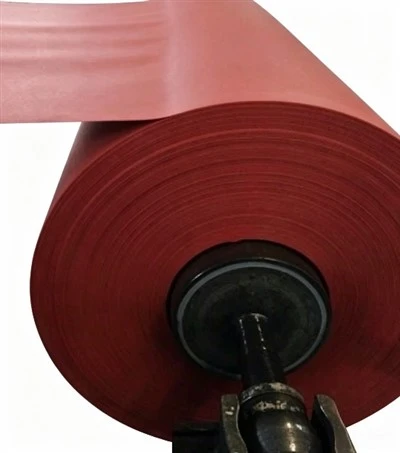
If you’re looking for a cable paper supplier that prioritizes rigorous testing, tailored performance, and long-term reliability, we’re here to help you find the right grade for your needs. Reach out to our team to discuss your specific application requirements, and we’ll provide custom test data, sample sheets, and guidance to ensure your cables meet and exceed industry standards.
Cling Film References
IEEE Std 62-2015, Standard for General Requirements for Paper-Insulated Shielded Power Cables Rated 2500 V through 345 kV
IEC 60641-1:2020, Pressboard and paper for electrical purposes – Part 1: Definitions and general requirements
Bengtsson, S., & Lindberg, K. (2018). Thermal Stability of Cellulose-Based Materials in High-Voltage Cable Insulation. Journal of Electrical Materials, 49(7), 4521-4529.
American Wire Gauge Association (2021). Performance Specifications for Insulating Papers for Power Cables. AWGA Technical Bulletin 127.
Shanghai Rongying Industrial Co., Ltd.
As one of the most professional paper for the cable industry manufacturers and suppliers in China, we’re featured by quality products and good price. Please rest assured to wholesale customized paper for the cable industry from our factory. If you have any enquiry about quotation and free sample, please feel free to email us.
Address: Jiahua Business Center C building 204 room, No.808 Hongqiao Road,Xuhui District,Shanghai,China
E-mail: info@shryspecialtypaper.com
WebSite: https://www.woolpaper.com/
