If you’ve ever stood next to a piece of heavy machinery that rumbles to life on a construction site, a manufacturing plant, or even a marine vessel, there’s a good chance there’s a pressure-reducing valve tucked somewhere inside that keeps everything running smoothly. As the owner and lead engineer of a hydraulic control valve supply company, I get asked this question all the time: “What does that little valve actually do, besides just sitting there and holding back pressure?” The truth is, it’s one of the most unsung heroes in a hydraulic control system—without it, you’re not just risking inefficiency, you’re risking costly damage to equipment, safety hazards, and downtime that no shop manager or operator can afford. Let’s break this down, from how hydraulic systems work at their core to why a pressure-reducing valve isn’t just an add-on, it’s a non-negotiable part of any reliable setup. Hydraulic Control Valve
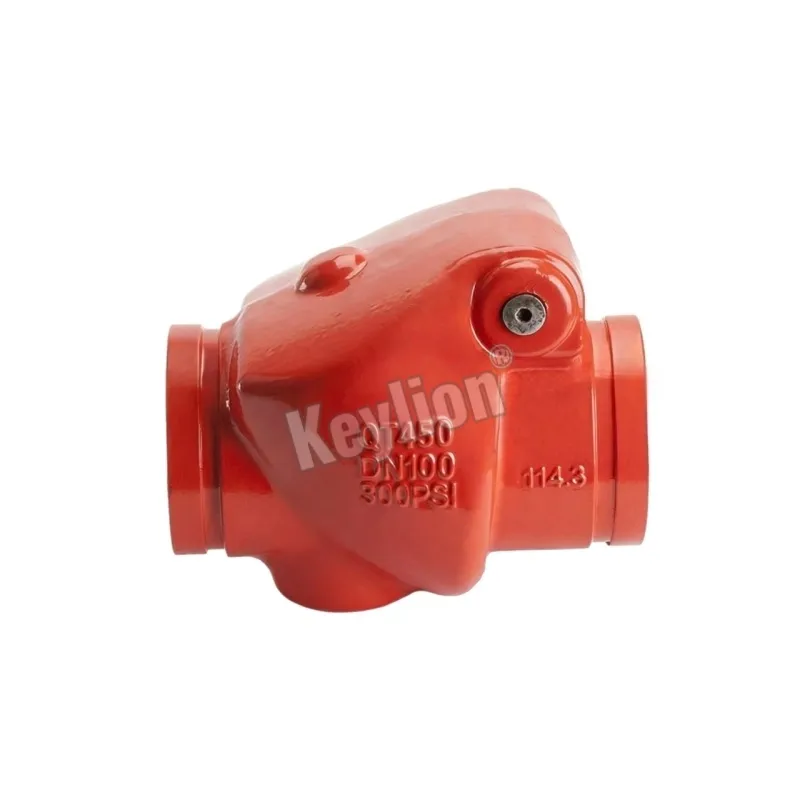
First, let’s start with a quick recap of how hydraulic systems work for anyone who might be new to this space. Hydraulics operate on Pascal’s principle—force applied to a confined fluid is transmitted equally in all directions. That’s why a tiny pump can move thousands of pounds of weight with a few lines of fluid. But here’s the catch: most hydraulic systems are designed to operate at a specific, consistent pressure to do their job. A main pump might push fluid through the system at, say, 3,000 PSI, but a sub-component like a pilot circuit for a directional control valve, or a clamping cylinder in a plastic injection molding machine, only needs 500 PSI to work correctly. If you run full pump pressure to every part of the system, those smaller components will wear out fast. Seals will crack, hoses will bulge, and delicate parts will fail prematurely. That’s exactly where a pressure-reducing valve comes in—its entire job is to take a higher, unregulated inlet pressure and drop it to a fixed, safe outlet pressure, no matter how much the inlet pressure fluctuates or how much flow is being used by other parts of the system.
Let me give you a real example from a recent project we worked on with a steel fabricator in the Midwest. They had a 5,000-ton press brake that used a single hydraulic pump to power the main bending ram and three smaller auxiliary functions: the back gauge positioning system, the hold-down clamps, and the light curtain safety circuit. The back gauge and clamps only needed 700 PSI, but the main ram ran at 2,500 PSI. Early on, they didn’t have pressure-reducing valves for the auxiliary circuits. After a few months of operation, the clamps started leaking seal fluid, and the light circuit’s solenoid valve burned out twice as often as it should have. When they brought their maintenance team to us, we ran a pressure test on their system and found that the inlet pressure to the auxiliary circuits was spiking up to 2,800 PSI whenever the main ram didn’t need full flow. That extra 2,100 PSI was enough to warp the small orings in the clamps and overwork the solenoids. We installed one pressure-reducing valve for each auxiliary circuit, set to their required operating pressures, and the issues stopped overnight. Their seal replacement frequency dropped by 75%, and they haven’t had to replace a solenoid in that system since. That’s the real-world impact of a valve that people often overlook.
Now, it’s not just about lowering pressure—it’s about maintaining a consistent outlet pressure, even when demand changes. Let’s say you have a hydraulic system that powers a conveyor belt and a lifting table. If the conveyor’s flow demand goes up, that can pull the inlet pressure to the system down a little. Without a pressure-reducing valve, the outlet pressure for the lifting table would drop too, meaning it might not lift a full load as high or as fast as it should. A good pressure-reducing valve has a built-in spring and poppet mechanism that compensates for those changes. When the inlet pressure drops, the spring pushes the poppet open just a little more to let more fluid through, keeping the outlet pressure steady. If the outlet pressure starts to climb for any reason, the poppet closes slightly to restrict flow, preventing over-pressurization. This is called “pressure compensation,” and it’s what makes pressure-reducing valves reliable for continuous operation.
Another thing I see a lot of people get wrong is confusing pressure-reducing valves with relief valves. They’re both pressure-control valves, but they do totally different jobs, and mixing them up is a common mistake that leads to big problems. A relief valve’s job is to protect the entire system from overpressure—if the pressure gets too high, it opens up and diverts excess fluid back to the reservoir, preventing pipes or the pump from bursting. A pressure-reducing valve is a downstream valve: it controls pressure for a specific branch of the system, not the whole thing. You can’t use a relief valve to set a consistent pressure for a sub-component, and you can’t use a pressure-reducing valve to protect the entire system from overload. Last year, we had a customer call us panicking because their entire hydraulic pump failed after two weeks of installing a custom system. They’d used a relief valve as a pressure-reducing valve for their tool changer, and when the tool changer’s demand for flow dropped, the relief valve kept diverting fluid back to the reservoir, causing the inlet pressure to the tool changer to spike. That spike worked its way back to the pump, which wasn’t designed to handle that kind of fluctuating pressure, and it burned out the pump’s internals. That was a $12,000 mistake that could have been avoided just by picking the right valve for the job.
Pressure-reducing valves also come in different types for different applications, which is why it’s important to work with someone who knows hydraulic systems, not just someone selling parts. There are direct-acting pressure-reducing valves, which are the most common for low-flow applications, like small pilot circuits or clamping systems. They’re simple, affordable, and work well when flow rates are consistent. For higher-flow applications, like large conveyor systems or heavy lifting cylinders, we use pilot-operated pressure-reducing valves. These use a smaller pilot valve to control the main poppet, so they can handle much higher flow rates without the pressure drop or instability that direct-acting valves can have. There are also adjustable pressure-reducing valves, so you can tweak the outlet pressure if your application’s needs change, like if you start working with thicker steel that needs higher clamp pressure. And for applications where safety is non-negotiable, like medical hydraulic systems or aerospace hydraulics, there are pressure-reducing valves with built-in locks that keep the outlet pressure fixed, so no operator can accidentally adjust it to a dangerous level.
Let’s talk about maintenance too, because a valve is only as good as its installation and upkeep. I’ve seen way too many systems where a pressure-reducing valve fails just because it’s been left dirty, or the filter in front of it is clogged. Hydraulic fluid has tiny particles of metal, dust, and seal debris in it, and if those particles get stuck in the poppet of a pressure-reducing valve, it can either get stuck open, causing the outlet pressure to drop too low, or stuck closed, causing the outlet pressure to spike. The best practice is to install a 10-micron filter before every pressure-reducing valve, and to test the outlet pressure monthly as part of routine maintenance. If you notice that the outlet pressure is drifting, that’s usually a sign that the valve needs to be rebuilt, or the filter needs to be changed. We keep a stock of replacement parts for all the pressure-reducing valves we supply, because we know that when a customer’s system goes down, they can’t wait for a parts order to come from across the country. That’s part of the service we offer—we don’t just sell valves, we help our customers keep their systems running.
One more point that’s often overlooked: energy efficiency. It might seem counterintuitive, but running only the pressure you need for each part of your hydraulic system saves energy. If you have a system that runs at 3,000 PSI everywhere, but your auxiliary parts only need 500 PSI, you’re wasting half the energy your pump is producing. A pressure-reducing valve lets each branch of the system operate at its optimal pressure, so your pump isn’t working harder than it needs to. For a plant that runs 24/7, that adds up to thousands of dollars a year in energy costs. We had another customer, a farm equipment manufacturer, who switched to pressure-reducing valves in their assembly line hydraulic systems and saw a 12% drop in their monthly electricity bill within six months. That’s a return on investment that’s hard to ignore, especially when supply chain costs are tight and every dollar counts.
At the end of the day, the role of a pressure-reducing valve is simple, even if the mechanics behind it are complex: it ensures that every part of your hydraulic control system gets exactly the pressure it needs, no more, no less. It protects your components from premature failure, keeps your system running consistently, improves energy efficiency, and helps keep operators safe. Too many people treat it as an afterthought, a valve you buy when you can’t figure out why your system is breaking, but it’s actually a critical component that should be part of the initial system design from the start.

If you’re building a new hydraulic system, or if you’re having problems with frequent component failures, pressure spikes, or energy costs that are too high, our team can help. We work with customers across all industries—manufacturing, construction, marine, agriculture, and more—to design and install the right pressure-reducing valves for their specific applications, with support from our engineers who have decades of experience in hydraulic systems. Contact us today to discuss your project or troubleshooting needs, and let’s make sure your hydraulic system is running at its best.
Hydraulic Control Valve References:
- Manual of Hydraulic Control Valves, International Fluid Power Society, 2021.
- Hydraulic System Design and Maintenance, Third Edition, Taylor & Francis Group, 2019.
- Pressure Control Valves: Application and Selection for Industrial Hydraulics, Fluid Power Journal, 2020.
- Safety Standards for Hydraulic Systems, Occupational Safety and Health Administration (OSHA), 2022.
Quanzhou Keylion Valve Co., Ltd.
We’re known as one of the most professional hydraulic control valve manufacturers and suppliers in China, also support customized service. We warmly welcome you to buy high quality hydraulic control valve made in China here from our factory. If you have any enquiry about cooperation, please feel free to email us.
Address: NO.17, JINYUAN, ZHENSHAN VILLAGE, NANAN CITY, FUJIAN PROVINCE
E-mail: sales@keylionvalve.com
WebSite: https://www.keylion-valves.com/
