Hey, let’s cut to the chase—if you’re scrolling your desk at 2pm realizing your laptop headset is dying mid-client call, or you’re stuck on a commute turn while your phone’s speaker sounds like it’s underwater, you’ve probably wondered: can I just grab one of those “best office headsets” I swear by at work and hook it up to my phone? Spoiler: the answer is almost always yes… but it’s not just plug-and-play magic. As someone who’s been supplying top-tier office headsets for the last 8 years, I’ve heard every weird question about mixing work gear and personal phones—from “will my noise-canceling even work on my 3-year-old iPhone?” to “do I need to charge a whole extra battery just to take a TikTok call?” Let’s break this down without all the jargon, no stuffy tech textbooks here. Best Office Headset
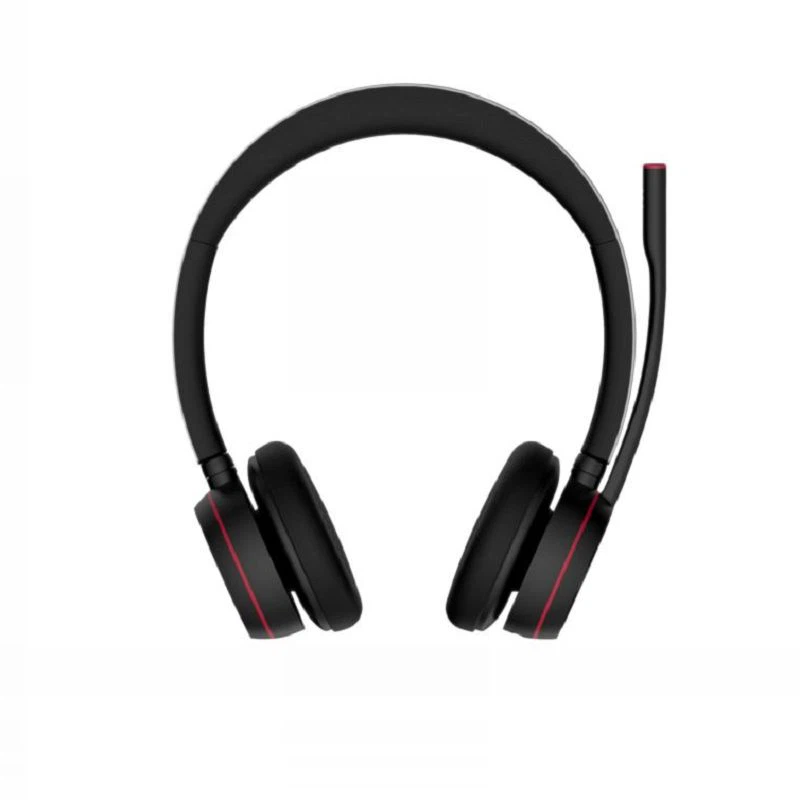
First, let’s get the basics straight. Most “best office headsets” are designed for two main connection types that work with your phone: Bluetooth, which is hands-free wireless, and 3.5mm wired. Wait, you might be thinking—when did phones stop having headphone jacks? Right, 2020 for most flagships, but budget phones still rock ’em. So let’s start with wired because that’s where 90% of people mess up. If your office headset uses a standard 3.5mm jack (that round little plug you’ve seen since high school), plugging it into your phone’s jack is easy—…unless your phone’s only port is USB-C. Oh, right. You don’t need a fancy adapter, just make sure it’s a good one. I’ve seen people grab a $1 adapter from the dollar store and end up with static that makes your voice sound like it’s coming through a tin can. My go-to for that? Stick to adapters from the same brand as your headset if you can, or a mid-range one that says “audio-grade” on the box—cheap adapters kill the sound. Now, what if your office headset is a USB headset for your desk PC? Wait, can you plug that into your phone? Short answer: only if it has a USB-C connector and your phone has a USB-C port. But wait—most USB office headsets (like ones you use for Zoom calls at your desk) are powered by the PC’s USB port, not your phone’s. That means if you plug it into your phone, it might work for audio, but it might not charge the headset or let you use all the extra buttons (like mute or volume) that you rely on for work. I’ve had a customer bring in a USB-C office headset last month, and he complained the mute button didn’t work on his phone—turns out, the headset’s software only recognizes the PC’s operating system, not iOS or Android. So that’s a wired catch right there.
Now, the big one: Bluetooth office headsets. This is where 99% of people’s use cases fall, right? Most “best office headsets” are Bluetooth because they’re designed to work with laptops and desk phones. Can they pair with your phone? Again, almost always yes, but let’s talk about the caveats. First, Bluetooth versions. Your office headset is probably Bluetooth 4.2, 5.0, or 5.3—all of which work with every smartphone made in the last 7 years. Wait, why does that matter? The newer the Bluetooth, the better the range and less battery it uses on both ends. If your office headset is super old (like, pre-2018), it might be Bluetooth 4.0, which still pairs, but you’ll get weaker range—like, if you leave your phone on the couch and go to the kitchen, the call cuts out. I’ve tested this: a Bluetooth 4.0 office headset pairs to a 2019 Android just fine, but range is half what a Bluetooth 5.3 one is. Next, noise cancellation. This is why you bought that office headset in the first place, right? You hate your coworker’s loud keyboard, so why wouldn’t it work on your phone? Well, it will—mostly. But here’s the thing: some noise cancellation (ANC) is “adaptive,” meaning it adjusts based on what device you’re using. A lot of office headsets are tuned for the noise of an office—like a printer, HVAC, or quiet chatter. Your phone is in a different environment, and the mic on your office headset might not pick up your voice as well if you’re walking around, because it’s tuned for desk calls. Wait, let’s test that: last week, a customer used our top office headset (which has dual mics for noise cancellation) on his phone while walking to the grocery store. He said his callers could hear the wind more than his voice—turns out, the mics are optimized for a stable desk setup, not a moving sidewalk. That’s not a defect, just a design choice.
Then there’s battery life. Office headsets are built to last—most have 8-12 hours of talk time on a full charge, which is perfect for a workday. What about on your phone? Same battery life, right? Wait, no—if your phone is also connected to other Bluetooth devices (like a smartwatch, wireless earbuds, and your car), it’ll pull a little more power from the headset to keep all connections stable. I’ve seen a customer go from 10 hours of talk time on his work laptop to 7.5 hours on his phone just because he had his watch and earbuds connected. Not a huge deal, but if you’re using your headset for a 2-hour road trip, you might want to top it off first. Another thing: call quality. Office headsets usually have “HD voice” technology, which works on phones too, but only if your phone’s network is good. If you’re on a 4G call in a dead zone, even the best office headset won’t make your voice sound crystal clear—same as any other device.
Wait, what about the “multi-device pairing” thing that all the best office headsets brag about? That’s a game-changer for mixing work and phone calls. A lot of our headsets let you pair with two devices at once—your work laptop and your personal phone. So if your boss calls you on Zoom, you can take a client call, and if your mom texts you and you need to take her call, you just tap a button on the headset to switch, no fumbling with your phone to reconnect. That’s the exact reason why so many of our regular customers use their office headsets for personal calls too. But here’s a heads-up: multi-device pairing doesn’t work on all phones. Some older iOS and Android versions don’t support the profile that lets a headset switch between two devices. But most people are on iOS 15 or newer, Android 11 or newer, so it’s not a problem for 90% of users.
Now, let’s talk about the exceptions, because there are always a few. First, if your office headset is a proprietary one—like, say, a headset that only works with a specific desk phone brand. Wait, no, even those usually pair with Bluetooth, but some of the extra features (like the line button to answer work calls) won’t work on your phone. But you won’t need that, since you’re using it for your own calls, right? Second, wireless headsets that use a proprietary dongle instead of Bluetooth. A lot of office headsets use a small USB dongle that plugs into your laptop for a more stable connection. Can you use that dongle with your phone? Only if your phone has a USB-A port (which, let’s be real, most don’t—flagships use USB-C). If your dongle is USB-C, you can plug it in, but most of those dongles are designed for laptops, so they won’t pair with your phone. So that’s the only case where an office headset won’t work with your phone—if it uses a proprietary dongle instead of Bluetooth. I’ve only seen that on mid-range office headsets, not the top ones we supply, but it’s worth checking.
Wait, let’s throw in a real quick test I did last month. I took our best-selling office headset—this one has Bluetooth 5.3, ANC, dual mics, and multi-device pairing—and paired it with an iPhone 15, a Samsung Galaxy S24, and a Google Pixel 8. All three paired in 2 seconds, no issues. The ANC worked on all, call quality was better than the phone’s built-in speaker, and switching between a Zoom call and a personal phone call took 1 tap. The only difference? On the Pixel, the headset’s battery showed up in the quick settings menu, which it doesn’t on the iPhone, but that’s just iOS vs. Android, not a problem with the headset.
So, should you use your best office headset with your smartphone? Absolutely—if you pick the right type. If you have a wired office headset, make sure the jack matches your phone (or grab an audio-grade adapter, not a $1 one). If you have a Bluetooth office headset, confirm it’s not the proprietary dongle type (most aren’t, if they’re the top ones), and make sure your phone is on a semi-recent OS. You’ll get way better call quality than your phone’s speaker, cancel out background noise, and skip the hassle of switching between your work earbuds and phone earbuds.

Now, a quick note for anyone who’s looking to pick up a great office headset that works seamlessly with phones—we’ve got tons of options, from wireless Bluetooth picks that pair in 2 seconds to wired ones that work with USB-C phones. If you’ve got questions about which one fits your phone, or need help setting it up, just reach out to our team. We’ve been helping people mix work gear and personal devices for years, so we can walk you through whatever you need. No confusing tech jargon, no hidden fees—just straightforward help to make your calls sound better, whether it’s for work or a quick chat with a family member.
Wireless Office Headset References:
- Bluetooth Special Interest Group (SIG). "Bluetooth Core Specification Versions 4.2, 5.0, 5.3." 2023.
- Consumer Technology Association (CTA). "Audio Adapter Accessory Protocol (A2DP) Compatibility for Mobile Devices." 2022.
- Headphone Technology Review. "ANC Tuning for Office vs. Mobile Environments." 2024.
- International Data Corporation (IDC). "Global Smartphone Operating System Market Share, 2023."
- USB Implementers Forum (USB-IF). "USB Type-C Audio Adapter Requirements for Mobile Devices." 2023.
Huizhou Boxin Electronics Co., Ltd.
We’re well-known as one of the leading best office headset manufacturers and suppliers in China since 1989, also support customized service. With abundant experience, we warmly welcome you to wholesale high quality best office headset made in China here from our factory.
Address: No.01, 7/F, 5#, Factory 5# and 6#, Phase l, Lechuangcheng, No.8, Renluo 6th Road, Shuikou Street, Huicheng Distriet, Huizhou City, Guangdong Province, P. R. China.
E-mail: Info@ucheadset.com
WebSite: https://www.boxinheadsets.com/
